

How Kick Points Affect Shot Speed: A Player's Guide
Table of Contents
- Understanding Kick Points and Their Role in Shot Speed
- Low Kick vs Mid Kick Hockey Stick: Performance Differences
- The Physics of Energy Transfer and Release Speed
- Hockey Stick Flex Profile Explained
- How to Choose a Hockey Stick Flex for Maximum Performance
- Optimizing Contact Points for Maximum Launch Speed
- Materials and Shaft Technology: Maximizing Kick Point Performance
- Frequently Asked Questions
Last Updated: October 4, 2026
Understanding Kick Points and Their Role in Shot Speed
A kick point is the location on a hockey stick's shaft where it flexes most during your shot, essentially the fulcrum of a lever.
At Epix Hockey, we've engineered three distinct kick point technologies, LightSpeed Low, Neo-Mid, and Synth Hybrid, because your playing style, approach velocity, and body mechanics all matter. Understanding how kick points work helps you pick the right stick for your game.

What is a kick point on a hockey stick?
The kick point is a design feature built into the shaft's stiffness profile, not a physical joint. During the loading phase, the shaft deforms and stores elastic potential energy like a pulled bowstring. When you release, the shaft snaps back, and the kick point location determines the timing and magnitude of that snap.
How shaft stiffness and flex profile work together
Shaft stiffness is measured on a flex rating scale: a flex rating of 85 requires 85 pounds of force to bend one inch under standard conditions. The flex profile is the curve of stiffness along the entire shaft. A well-designed stick is stiff at the top for stability and more flexible in the mid-shaft for energy storage. When shaft stiffness and kick point location work together, you get optimal energy transfer: a stiff upper shaft keeps your hands stable while a flexible loading zone stores energy efficiently, resulting in faster release speed with better accuracy.
Low Kick vs Mid Kick Hockey Stick: Performance Differences
The three main kick point categories, low, mid, and high, each deliver different performance characteristics. Your choice depends on your shot style, approach velocity, and what feels natural to your mechanics.
Low kick point mechanics and quick-release advantage
A low kick point sits in the bottom third of the shaft near the blade, loading quickly and releasing fast. Low kick sticks excel at snap shots and one-timers because the blade snaps back rapidly in a compact motion, ideal for forwards in tight spaces. The trade-off is feel: because the blade loads aggressively, you have less time to sense the puck during the loading phase.
Our Darkmatter series uses the LightSpeed Low kick profile, built for players who need explosive snap shots. The shaft loads instantly at the bottom, unleashing rapid energy transfer for blister-fast release without sacrificing control.
Mid kick point balance and control
A mid kick point sits in the middle of the shaft, loading gradually so you have more time to feel the puck. Mid kick sticks offer balance, more responsive than high kick designs but less explosive than low kick, with a loading phase that feels natural to most players. They work well for defensemen, two-way forwards, and power-play specialists who need versatility.
The Neo-Mid kick profile loads progressively through the mid-shaft, delivering exceptional puck feel and consistency with surgical precision.
High kick point and maximum power generation
A high kick point sits in the upper third of the shaft near your hands, allowing you to load more energy before maximum flex. High kick sticks generate the most raw power and benefit slapshots, but the extended loading phase makes them slower in tight spaces. They're best suited to open-ice situations where you have time to load fully.
The Physics of Energy Transfer and Release Speed
Understanding the physics behind kick points transforms how you think about shot speed. It's not magic. It's mechanics.
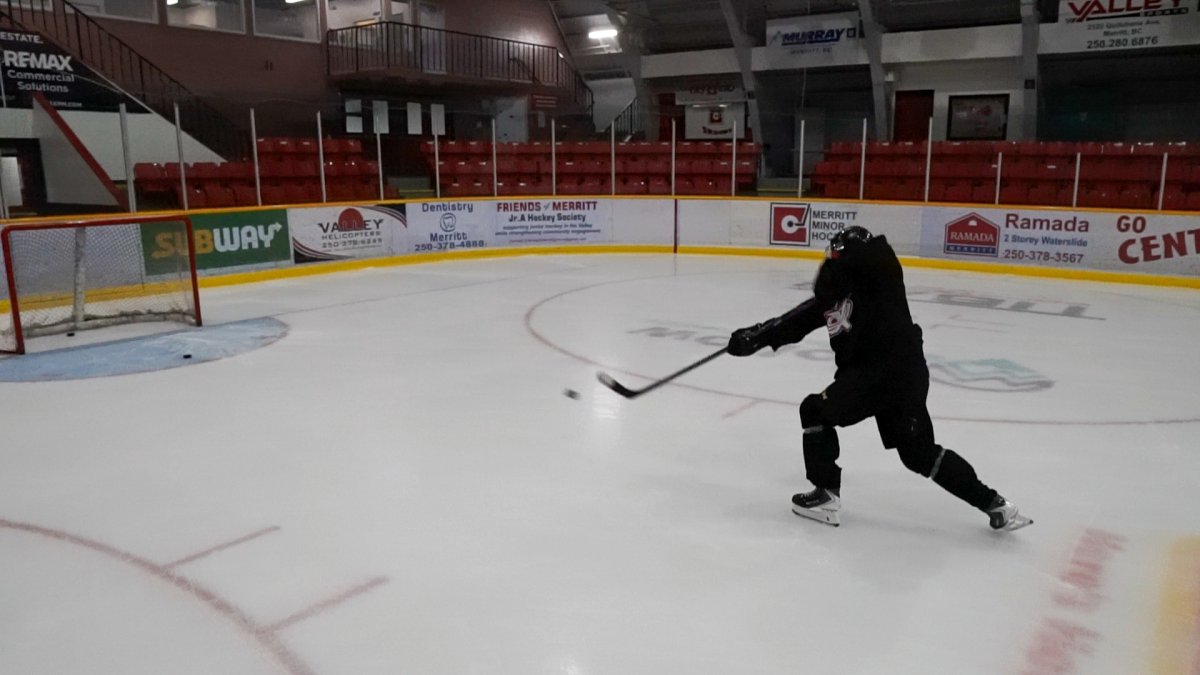
Loading phase and elastic potential energy
When you apply force to the stick during your shot, the shaft bends and stores elastic potential energy. The amount stored depends on how much you bend the shaft and how stiff it is. The loading phase is critical, the longer it is, the more energy you can store, but once the shaft reaches maximum flex, additional force only increases the risk of breaking the stick.
Shaft deformation and rebound velocity
When you release, the shaft snaps back and elastic potential energy converts to kinetic energy. The rebound velocity determines how fast the blade accelerates, a low kick point rebounds quickly while a high kick point rebounds more slowly but with greater force. Your body's motion (hand acceleration, core rotation) must align with shaft deformation for maximum efficiency; if your loading phase and rebound don't match your natural swing speed, you waste energy.
Center of mass motion during the shooting motion
During a shot, your center of mass moves forward and rotates, driving the shot through the stick as a lever. The kick point must align with your body's natural motion: if it loads too slowly for your approach velocity, you'll finish before maximum flex; if too quickly, you'll over-flex and lose control. The sweet spot is when your shaft's rebound velocity matches your body's deceleration at contact.
Hockey Stick Flex Profile Explained
The flex profile is the complete curve of stiffness along the shaft. It's not just about one number. It's about how stiffness varies from the top of the stick to the bottom.
How flex rating impacts energy storage
Flex rating is measured in pounds of force needed to bend the stick one inch. Higher flex ratings store more energy but require more force to load. Matching flex to your strength and speed is essential: younger players and smaller adults typically need lower flex ratings (70-75), while larger adults and elite players can handle higher ratings (85-100). A stick stiff at the top but flexible in the loading zone stores energy efficiently where it matters most.
Flex consistency and shot accuracy trade-offs
Softer sticks flex more and are easier to load but less consistent, small variations in loading speed create big variations in release speed. Stiffer sticks flex less and are harder to load but more consistent. The best flex profile balances consistency with responsiveness, which is why mid-range flex ratings (75-85) work for most players.
How to Choose a Hockey Stick Flex for Maximum Performance
Choosing the right flex is personal. It depends on your strength, your approach velocity, your playing style, and your feel preference.
Matching flex to your approach velocity and body weight
Approach velocity (how fast you're moving when you shoot) and body weight determine how much force you can generate. A general rule: multiply your body weight by 0.5 to 0.75 for a starting flex rating. But playing style matters more than the formula, snap shot players often prefer softer flex, while slapshot players prefer stiffer flex.
Testing different kick points to find your optimal feel
Test different kick points, your hands will tell you which one matches your mechanics. Pay attention to both release speed and feel. Your optimal kick point is the one that feels natural to your mechanics and delivers the release speed you need. For most players, that's a mid kick design; for slot players and forwards, that's often a low kick design.
Optimizing Contact Points for Maximum Launch Speed
The contact point is where the blade meets the puck. The sweet spot is the location on the blade where contact generates maximum velocity with minimum vibration.
Sweet spot location and shot consistency
The sweet spot on a hockey blade is typically in the center of the blade, about one-third of the way up from the toe.
Hitting the sweet spot consistently is the difference between a 85 mph shot and a 95 mph shot. Missing the sweet spot by half an inch can reduce velocity by 10 percent.
Consistency comes from practice. You need to load the stick the same way every time. You need to follow through the same way every time.
The kick point affects sweet spot consistency because how kick points affect shot speed depends on alignment with your mechanics.
Biomechanics of the follow-through and torque generation
The follow-through is the final phase of your shot. After you release the puck, your stick continues moving. This follow-through matters because it reveals whether your mechanics were efficient.
A smooth follow-through means you loaded and released the stick efficiently. Your energy transferred fully to the puck. A jerky follow-through means you fought the stick.
Torque is rotational force. During your shot, your core rotates. This rotation creates torque that flows through the stick to the blade.
A well-designed kick point allows the shaft to rebound in alignment with your body's natural rotation. This creates smooth torque transfer. The result is higher release speed with better accuracy.
Materials and Shaft Technology: Maximizing Kick Point Performance
The materials in your stick's shaft determine how it behaves. Different materials store energy differently. They rebound at different speeds. They vibrate differently.
Carbon fiber construction and energy storage capacity
Carbon fiber is the standard material for modern hockey sticks. It's strong, light, and stores energy efficiently. The amount of energy stored depends on the quality and layup of the carbon fiber.
Aerospace-grade carbon fiber, the kind used in aircraft and spacecraft, offers superior energy storage. It's more consistent. It rebounds faster. It vibrates less.
Our Darkmatter and Icecold sticks use aerospace-grade carbon fiber combined with our Elite Fusion Matrix material. This combination maximizes energy storage in the loading zone while maintaining stability in the upper shaft. The result is faster release speed with better feel.
How advanced materials improve coefficient of restitution
Coefficient of restitution is a measure of how much energy bounces back after impact. A higher coefficient means more energy returns.
In hockey sticks, coefficient of restitution determines how much of your loaded energy transfers to the puck.
When you load the stick, the shaft deforms. When you release, the shaft snaps back.
The combination of aerospace-grade carbon fiber with boron fibers and titanium infusion creates a shaft that rebounds explosively.
Choosing the right kick point isn't complicated once you understand how they work.
At Epix Hockey, we've engineered sticks with proprietary kick point technologies designed for different playing styles.
Frequently Asked Questions
What is a kick point on a hockey stick?
A kick point is the location along the shaft where maximum deformation occurs during the loading phase of your shot. When you load the stick, the shaft bends at this point, storing elastic potential energy. Upon release, this energy transfers to the puck, generating shot speed. Different kick point locations (low, mid, or high) determine how quickly the stick releases this energy and how much force is transferred to your shot.
How does a low kick point differ from a mid kick point?
A low kick point bends near the bottom of the shaft, loading instantly and releasing energy very quickly. This suits snap shots and one-timers where you need rapid release. A mid kick point flexes through the middle of the shaft, offering a balance between quick release and control, making it ideal for all-around play. Low kick points prioritize speed; mid kick points prioritize consistency and puck feel across different shot types.
How do I know which kick point is right for my playing style?
Your choice depends on your approach velocity, shot preferences, and playing position. Players who take frequent snap shots and one-timers benefit from low kick points for instant energy release. Players who favor wrist shots and need consistent accuracy prefer mid kick points. Test different profiles at your local rink if possible, or start with a mid kick for balanced performance. Your body weight and approach velocity also matter: heavier players and faster skaters can load mid or high kick points more effectively.
Does shaft material really affect how kick points perform?
Yes. Advanced carbon fiber and aerospace-grade materials improve how efficiently the shaft stores and releases elastic potential energy. Higher-quality materials allow for greater energy storage without added weight, meaning the shaft returns more force to the puck during the release phase. Materials like titanium-infused carbon enhance the coefficient of restitution, the measure of how much energy the stick returns compared to what you put in, directly improving your shot speed and consistency.