

Does Stick Weight Affect Shot Velocity? Key Facts
Table of Contents
- The Physics of Stick Weight and Shot Velocity
- Hockey Stick Flex vs Weight: Which Matters More?
- Hockey Stick Kick Point Technology Explained
- Benefits of Lightweight Hockey Sticks for Hand Speed
- Weight vs Stability: Finding the Balance
- Choosing the Right Stick Weight by Age and Skill Level
- Frequently Asked Questions
Last Updated: September 16, 2026
The Physics of Stick Weight and Shot Velocity
Does stick weight affect shot velocity? Yes, but not in the direction most players assume. A lighter stick generally increases how fast you can move your hands through the shooting motion, while a heavier stick can store and transfer more energy when you load it properly. The real answer sits in the trade-off between those two forces, and understanding it changes how you shop for a stick.
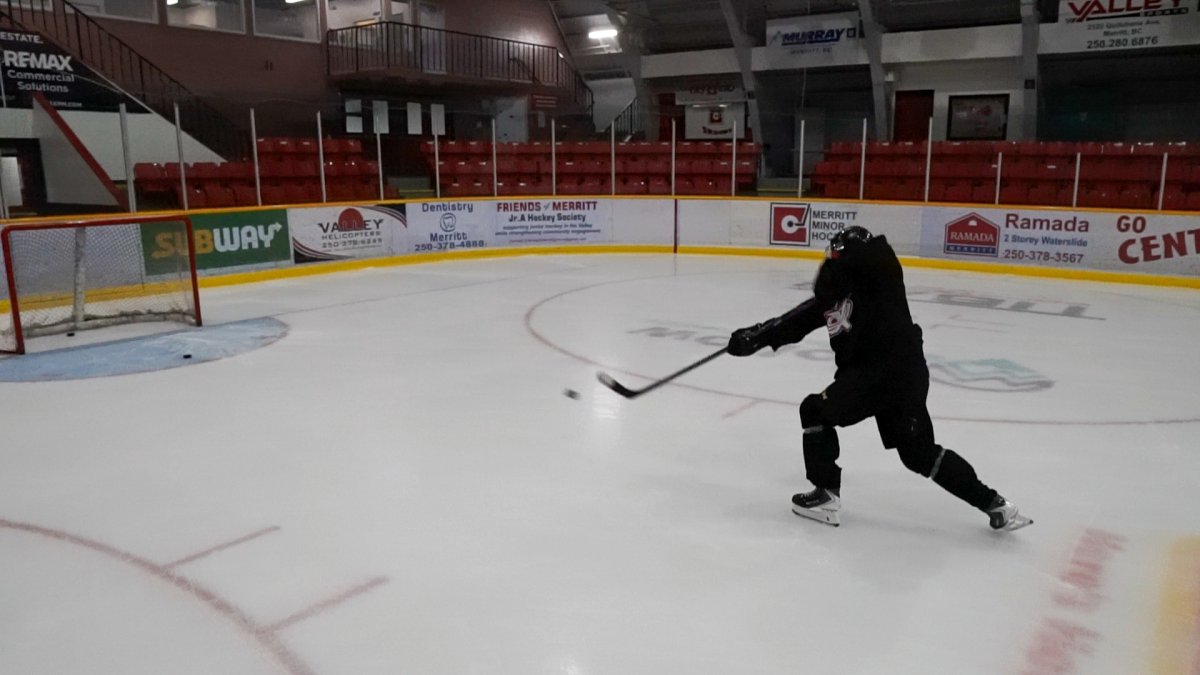
Hockey player taking a slap shot on an outdoor rink to test how stick weight impacts shot velocity at dusk.
Kinetic Energy and Swing Weight
Shot velocity comes from kinetic energy, and kinetic energy depends on both mass and speed. The formula is simple: kinetic energy equals one-half mass times velocity squared. Because velocity is squared, hand speed matters more than mass in the equation. That is why a lighter stick that you can whip faster often produces a harder shot than a heavier stick you cannot accelerate.
How Weight Distribution Changes Your Shot
Weight distribution, often called balance point, determines how a stick feels in your hands more than its total weight does. A stick balanced toward the blade feels heavier on the shot but steadier in stick checks. A stick balanced toward the handle feels quicker but can feel whippy on heavy contact.
Hockey Stick Flex vs Weight: Which Matters More?
For most players, flex matters more than weight for shot velocity, but only if the flex rating matches your strength and shooting style. A stick that is too stiff will not load, so you get no stored energy and a flat, slow release. A stick that is too whippy loads easily but can feel unpredictable on hard passes and one-timers.
Load and Release: The Flex Mechanism
Load and release is the process where your shooting motion bends the shaft, storing energy, and the shaft snaps back to release that energy into the puck. The lower the kick point, the faster the shaft loads during a quick wrist shot. Higher kick points suit slap shots where you have more time to lean into the shaft.
Hockey Stick Kick Point Technology Explained
Kick point is the spot on the shaft designed to flex most, and it directly shapes when and how your shot releases. It is the single biggest lever on release speed after flex rating, because it determines how much of your shooting motion actually goes into bending the shaft versus just moving it through the air.
Three profiles dominate modern sticks:
- Low kick: The flex zone sits near the blade. It loads in a short, quick motion, which suits wrist and snap shots taken in tight. The trade-off is a narrower window, you have to catch the puck out front to load it properly.
- Mid kick: The flex zone sits near the middle of the shaft. It needs a longer loading motion but returns energy across a wider range of shot types. This is the default for players who mix wristers, snap shots, and the occasional slap shot.
- Hybrid kick: The shaft is engineered to load at different points depending on how you lean into it. It loads low on quick releases and higher on full wind-ups, so one stick covers more shooting styles.
Why Kick Point Changes Release Speed
When you load a shaft, you are storing elastic energy in the carbon layers. The kick point controls how far the shaft has to bend before it snaps back, and how quickly that snap happens. A low kick point bends less but returns faster, which is why it feels "quick", the puck leaves before a defender can close the gap.
Matching Kick Point to Your Shot Type
- Snap and wrist shots from the slot: Low kick. You want the puck gone before the goalie sets.
- Point shots and one-timers: Mid or high kick. You have the wind-up time to load a longer flex zone.
- Two-way play: Hybrid. You are not committing to one release window.
A common mistake is buying an elite-stiff low-kick stick because it looks pro. If your shooting motion is short and you cannot bend the lower shaft, the stick never loads and you get a flat, slow release. The physics of elastic energy storage in composite shafts explains why a stiffer, well-placed flex zone returns more energy than a uniformly soft shaft, but only when the player can actually deflect it.
Benefits of Lightweight Hockey Sticks for Hand Speed
Hand speed is where lightweight sticks earn their reputation. A lighter stick lets you move through the shooting motion faster, and because velocity is squared in the kinetic energy equation, that extra hand speed translates directly into shot velocity. It also helps you get your shot off quicker under pressure, which matters more in a game than raw top-end speed.
Weight vs Stability: Finding the Balance
The best stick weight is the lightest one you can still control on heavy contact and in board battles. Go too light and you lose stability on stick checks and face-offs. Go too heavy and you sacrifice the hand speed that generates shot velocity in the first place.
Here is how to judge the trade-off by role:
Player Priority |
Lean Toward |
Reason |
|---|---|---|
Quick release, tight spaces |
Lighter stick |
Faster hand speed and quicker load |
Slap shots, point play |
Slightly heavier |
More mass to transfer into the puck |
Two-way forward |
Balanced |
Needs both release and stability |
Physical defensive play |
Heavier, blade-balanced |
Better on stick checks and board battles |
Weight Distribution vs Total Weight
Focus on balance point before you focus on the gram count. A stick that feels balanced in your top hand will shoot and handle better than a lighter stick that feels blade-heavy. When you shop, hold the stick in your shooting grip and rotate it through a wrist shot motion. If it feels like it is pulling away from your hands, the balance is wrong for you.
Choosing the Right Stick Weight by Age and Skill Level
Most stick-weight advice stops at "lighter is better." That is wrong for a large share of players. The right weight depends on your strength-to-weight ratio, your shooting motion, and how much strain your wrists and shoulders can absorb over a season. This is the part of the equation competitors skip.
The Strength-to-Weight Rule
A stick only helps you shoot harder if you can accelerate it and load it. A 350-gram stick in the hands of a strong adult loads and whips. The same stick in the hands of a 12-year-old is dead weight, the player cannot generate enough hand speed to bend the shaft, so the puck comes off slow and the player learns to muscle the shot instead of using the flex.
Weight Distribution and Injury Prevention
This is the angle almost no guide covers. A stick that is too blade-heavy forces your top hand to work harder to rotate the stick through the shot. Over a season, that shows up as wrist and forearm strain, especially in players who take a high volume of shots in practice. A stick that is too handle-heavy feels quick but can put more load on the shoulder during slap shots because you are fighting the balance point through the wind-up.
Profile-Based Recommendations
- Youth (roughly 8-12): Prioritize a flex they can actually bend and a balanced weight. Durability matters more than gram count at this stage. Avoid over-investing in a custom spec while their strength is still changing.
- Teen and intermediate: A mid-range flex with a balanced or slightly handle-light build. This is the stage where players start to develop a repeatable shot, so a stick that loads predictably matters more than the lightest option on the shelf.
- Advanced and elite: Fine-tune weight, balance point, and kick point to your shooting style. At this level, a few grams matter less than whether the stick matches your release window.
- Older or injury-prone players: Lean toward a slightly heavier, more balanced stick. The extra mass can reduce the vibration and strain that lighter, stiffer shafts transmit to the wrists and elbows on off-center contact.
How to Test Before You Commit
Hold the stick in your shooting grip and rotate it through a full wrist shot motion in the air. If it pulls away from your hands, the balance is wrong. If you cannot feel the shaft bend, the flex is wrong. The stick that feels fastest through that motion, not the lightest on the scale, is usually the one that will shoot hardest for you.
Frequently Asked Questions
Does a lighter hockey stick increase shot velocity?
A lighter stick can increase shot velocity by allowing faster hand speed and quicker acceleration through the shooting motion. Less mass means your muscles generate blade speed more efficiently, which matters most on wrist shots and snap shots where release speed is critical. However, very light sticks may reduce power transfer on slap shots because there is less mass behind the puck. The ideal weight depends on your shooting style and position.
Does stick flex matter more than weight for shot power?
Flex and weight work together and neither one alone determines shot power. Flex controls how much energy the shaft stores during the load phase and releases into the puck. Weight affects how fast you can swing the stick and how much kinetic energy reaches the blade. A stick with the wrong flex will underperform regardless of weight. Matching flex to your body weight and shooting mechanics produces more consistent power transfer than chasing a specific gram count.
How does stick balance point affect shooting mechanics?
Balance point determines where the stick's mass sits relative to your hands, which changes how the stick feels during the shooting motion. A stick balanced toward the blade feels heavier on the bottom hand and can improve stability for slap shots and stick checks. A stick balanced toward the handle feels quicker in tight spaces and helps hand speed on quick releases. Two sticks at the same total weight can feel completely different depending on where that weight sits.
Is there a trade-off between stick durability and weight?
Reducing weight often means using less material or thinner walls, which can lower durability. The key is how the material is engineered. Aerospace-grade carbon fiber and advanced resin systems allow manufacturers to build lighter sticks without sacrificing strength. Titanium-infused constructions and multi-fiber weaves distribute stress more evenly across the shaft, which helps prevent cracks and snaps even at lower weights. Material quality matters more than raw gram count for long-term durability. Shot velocity is a balance, not a single number. The stick that shoots hardest for you is the one light enough to move fast and stiff enough to load, matched to your flex and kick point. Epix Hockey builds aerospace-grade carbon sticks with customizable flex, curve, and kick point so you can dial in that balance instead of guessing. Explore the Darkmatter and Black Ice collections and build a stick that fits your shot.